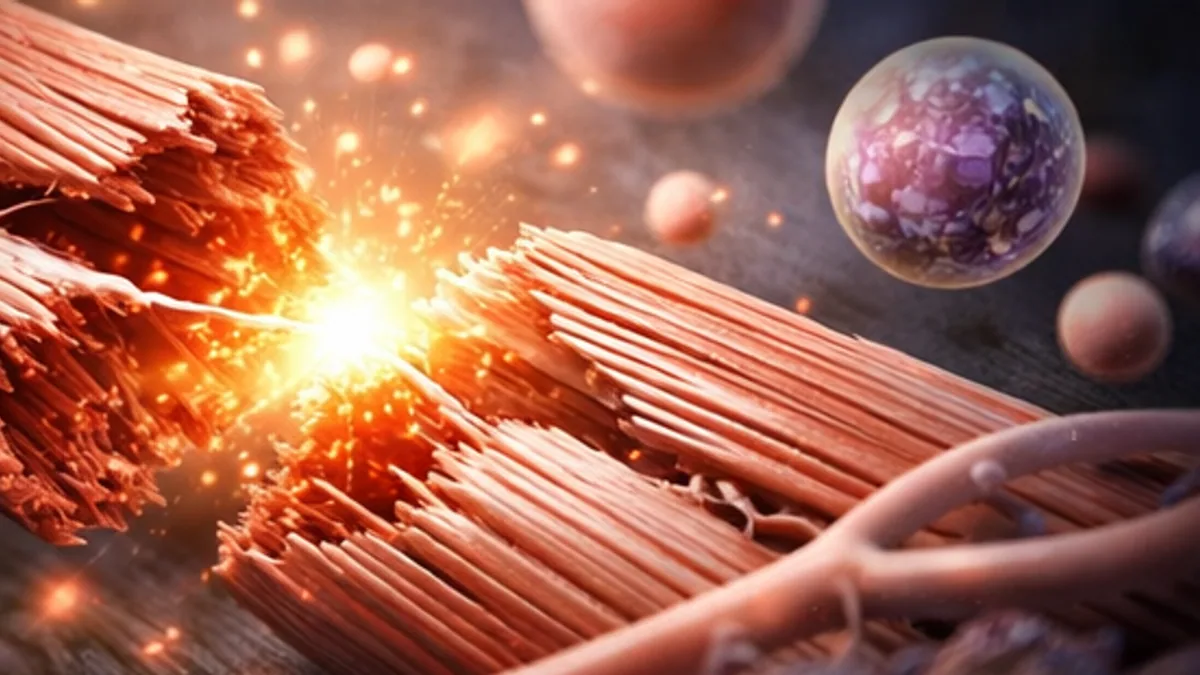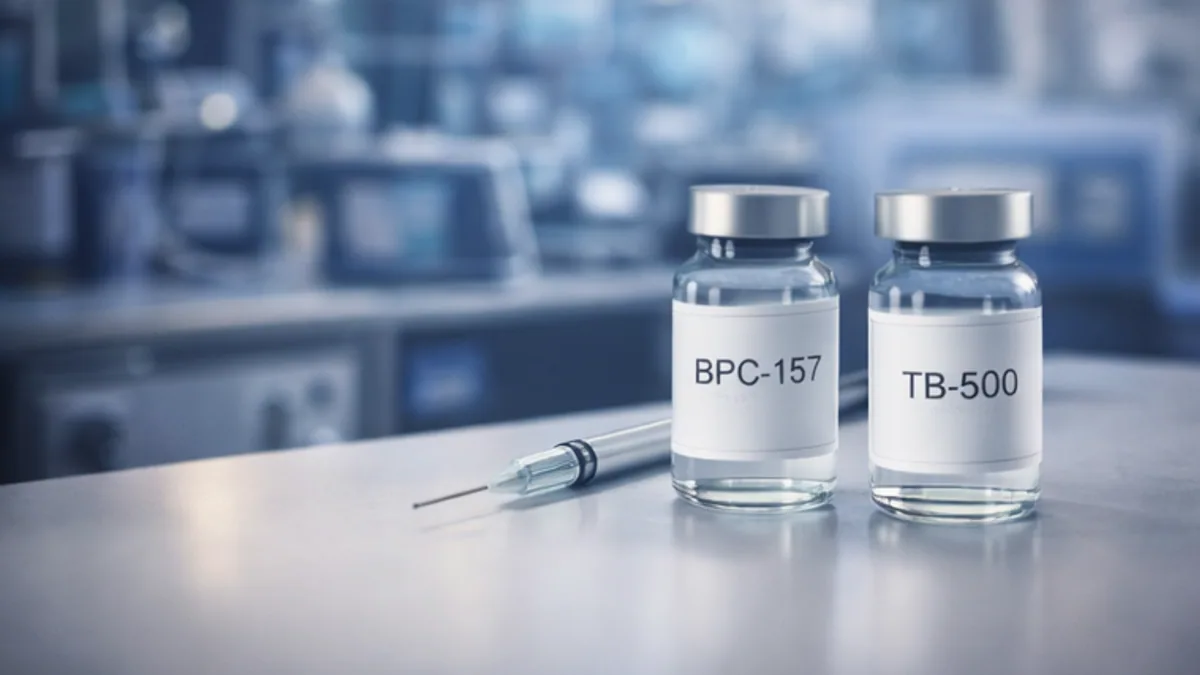
Peptide research has expanded rapidly in recent years, particularly in the field of tissue repair and regenerative biology. Among the most discussed compounds are TB-500 and BPC-157 , two peptides frequently associated with recovery research, musculoskeletal repair, and cellular regeneration.
Although they are often mentioned together—and sometimes incorrectly treated as interchangeable—their biological roles are fundamentally different.
Understanding TB-500 requires looking beyond inflammation or localized healing. Its primary significance lies in something far more foundational: actin regulation , a process central to how cells move, repair damage, and rebuild tissue architecture.
The Origin of TB-500: A Fragment of Thymosin Beta-4
TB-500 is the synthetic research version of Thymosin Beta-4 (Tβ4) , a naturally occurring peptide found throughout mammalian tissues. Thymosin Beta-4 plays a major role in:
- Cellular migration
- Tissue remodeling
- Angiogenesis (formation of new blood vessels)
- Cytoskeletal organization
Rather than acting as a growth factor itself, TB-500 influences how cells physically reorganize during healing.
This distinction is critical.
Where many recovery compounds stimulate signaling pathways, TB-500 helps enable the structural conditions necessary for repair to occur .
Understanding Actin: The Foundation of Cellular Movement
To understand TB-500’s mechanism, researchers focus on actin , one of the most abundant proteins in the human body. Actin forms microscopic filaments that create the cellular cytoskeleton—the internal framework responsible for:
- Cell shape
- Mechanical stability
- Movement and migration
- Intracellular transport
When tissue injury occurs, repair depends heavily on the ability of cells to migrate toward damaged areas. Without coordinated actin dynamics, healing slows dramatically. TB-500 interacts directly with this system.
TB-500’s Role in Actin Regulation
TB-500 binds to G-actin (globular actin) and helps regulate its polymerization into functional filaments. This process supports:
- Faster cell migration
- Improved wound closure models
- Enhanced tissue remodeling
- Coordinated regeneration responses
Instead of targeting inflammation alone, TB-500 influences the physical mobility of repair cells .
How TB-500 Supports Tissue Repair
Research models investigating Thymosin Beta-4 demonstrate several consistent biological effects.
Key Observed Mechanisms
- Enhanced Cellular Migration Repair cells—including endothelial and progenitor cells—reach injured tissue more efficiently.
- Angiogenesis Support Blood vessel formation improves oxygen and nutrient delivery.
- Reduced Fibrosis Formation Tissue remodeling appears more organized rather than scar-dominant.
- Systemic Distribution TB-500’s small molecular size allows broader tissue penetration compared to localized peptides.
These characteristics explain why TB-500 is frequently studied in tendon, ligament, muscle, and cardiac repair models
TB-500 vs BPC-157: Mechanistic Comparison
Although both peptides appear in recovery discussions, their biological targets differ substantially.
| Feature | TB-500 | BPC-157 |
|---|---|---|
| Origin | Thymosin Beta-4 fragment | Gastric protective peptide |
| Primary Action | Actin regulation | Cytoprotection & signaling |
| Healing Scope | Systemic | Localized |
| Angiogenesis | Strong | Moderate |
| Cell Migration | Directly enhanced | Indirect support |
| Gastrointestinal Effects | Minimal | Significant |
Conceptual Difference
- BPC-157 primarily stabilizes damaged environments.
- TB-500 helps cells physically reach and rebuild injured areas.
Because of this, research discussions often frame them as complementary rather than competitive compounds.
Why Researchers Often Study TB-500 and BPC-157 Together
In experimental settings, tissue repair typically requires multiple biological phases:
- Inflammation control
- Cellular protection
- Migration of repair cells
- Structural remodeling
- Functional restoration
BPC-157 appears more active during early stabilization phases, while TB-500 becomes relevant during migration and remodeling. This theoretical synergy explains why combined investigation frequently appears in regenerative research conversations.
Applications Studied in Research Models
Preclinical studies involving Thymosin Beta-4 suggest potential relevance across multiple tissue systems.
Musculoskeletal Models
- Tendon injury recovery
- Ligament repair
- Skeletal muscle regeneration
Cardiovascular Research
Thymosin Beta-4 has been investigated for cardiac tissue remodeling following ischemic injury due to its angiogenic properties.
Dermatological and Wound Healing Studies
Improved epithelial migration and faster wound closure have been observed in experimental environments.
Importantly, most findings remain preclinical , emphasizing mechanistic understanding rather than therapeutic claims.
Safety and Regulatory Context
TB-500 occupies a research-only classification in most jurisdictions.
| Category | Status |
|---|---|
| FDA Approval | Not approved |
| Clinical Therapeutic Use | Limited |
| Research Classification | Experimental peptide |
| Sports Regulation | Prohibited by WADA |
Because human clinical data remains limited, responsible discussion focuses on biological mechanisms rather than outcomes.
Limitations and Scientific Unknowns
Despite promising mechanistic data, several unanswered questions remain:
- Long-term systemic exposure effects
- Optimal dosing models in humans
- Interaction with immune signaling pathways
- Standardized pharmacokinetics
Modern peptide research increasingly emphasizes cautious interpretation of early regenerative findings.
The Bigger Picture: Structural Biology in Regeneration
TB-500 highlights an important shift in regenerative science.
Healing is no longer viewed solely as chemical signaling—it is also a structural process involving cellular architecture, movement, and organization.
By influencing actin dynamics, TB-500 represents a category of compounds aimed at enabling biological repair systems rather than replacing them.
Understanding this distinction helps explain why TB-500 continues attracting interest in tissue engineering and recovery research discussions.
Conclusion
TB-500 and BPC-157 are frequently grouped together, yet they operate through distinctly different biological mechanisms.
BPC-157 focuses on protective signaling and localized stabilization, while TB-500 acts at the cytoskeletal level, supporting cellular migration and systemic tissue remodeling through actin regulation.
Rather than competing solutions, they represent separate components of the complex biological choreography involved in repair.
As peptide science evolves, understanding these mechanistic differences becomes essential—not only for interpreting research responsibly but also for advancing regenerative biology with scientific precision.
References
- Belsky JB, Rivers EP, Morris DC. Thymosin beta 4 regulation of actin in sepsis. https://pmc.ncbi.nlm.nih.gov/articles/PMC6556887/
- Philp D, Kleinman HK. Animal studies with thymosin beta, a multifunctional tissue repair and regeneration peptide. https://pubmed.ncbi.nlm.nih.gov/20536453/
- Zhang Y, et al. A novel dimeric thymosin beta 4 with enhanced activities accelerates the rate of wound healing. https://pmc.ncbi.nlm.nih.gov/articles/PMC3792846/
- Peptpedia Research Team. TB-500 and Thymosin Beta-4: Actin Polymerization, Cell Migration, and Tissue Repair Signaling. https://peptpedia.org/research/tb-500-thymosin-beta4-actin-polymerization
- Peptide Research Team. BPC-157 vs TB-500: Research Comparison, Mechanisms & Preclinical Data. https://en.wikipedia.org/wiki/Thymosin_beta-4
- PeptaBase Research. TB-500 (Thymosin Beta-4): Evidence for Tendon and Muscle Repair. https://www.peptabase.com/blog/tb-500-thymosin-beta-4-tendon-muscle-repair