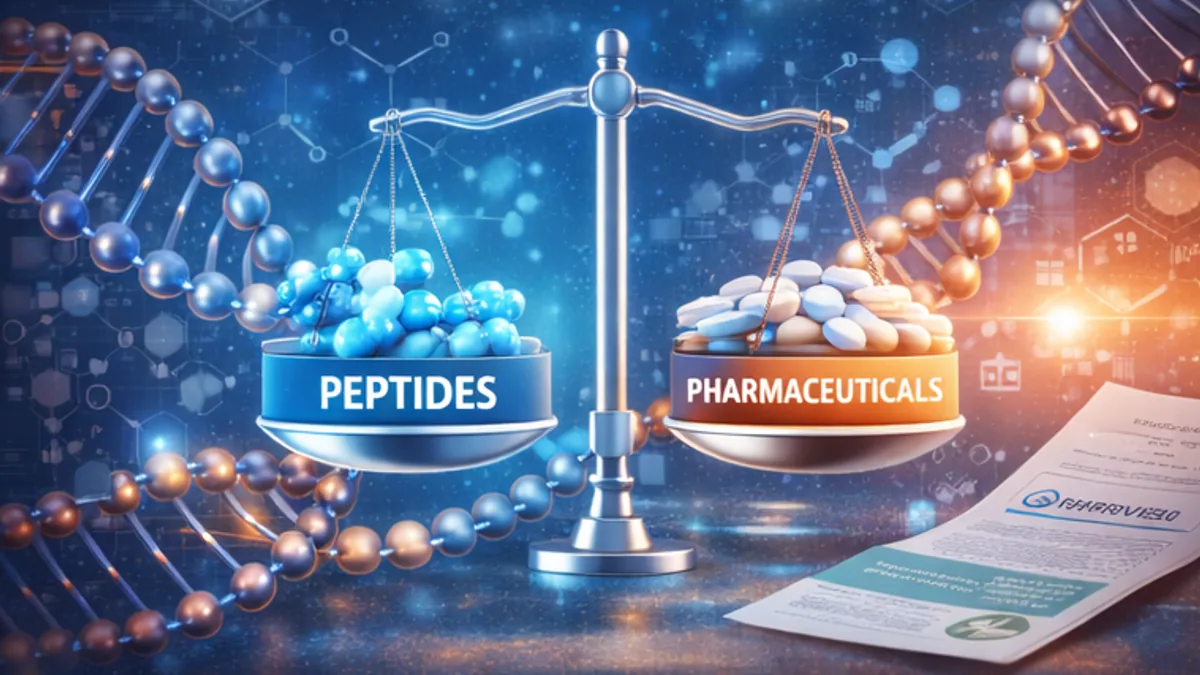
In today’s peptide marketplace, terms like research-grade , pharmaceutical-grade , and GMP quality are often used interchangeably — sometimes intentionally, sometimes out of misunderstanding. For researchers, clinicians, and informed consumers, knowing what these labels actually mean is essential.
While both research-grade and pharmaceutical-grade peptides may originate from similar chemical processes, they exist in entirely different regulatory worlds. Their manufacturing standards, quality controls, legal classifications, and intended uses are fundamentally distinct.
Understanding these differences helps clarify expectations around safety, consistency, and clinical reliability — and explains why most peptides never become approved medications.
What Does “Research-Grade” Really Mean?
Research-grade peptides are compounds manufactured specifically for laboratory and experimental use. They are intended for:
- Cell culture experiments
- Animal studies
- Mechanistic research
- Early pharmacology testing
They are not approved for human consumption .
Most research peptides are sold under a “for research use only” (RUO) designation. This legal classification allows suppliers to distribute peptides for scientific investigation without meeting pharmaceutical regulatory requirements.
Typical Characteristics of Research-Grade Peptides
Research-grade peptides usually include:
- Variable purity levels (often 95–98%)
- Limited batch consistency
- Minimal regulatory oversight
- Certificates of Analysis (COAs) provided by the manufacturer
- No formal clinical safety validation
While many research suppliers strive for high quality, there is no centralized authority enforcing uniform standards across the research peptide market.
As a result, product consistency can vary significantly between vendors — and even between batches from the same supplier.
What Defines Pharmaceutical-Grade Peptides?
Pharmaceutical-grade peptides are compounds that have undergone rigorous development, testing, and regulatory review for approved medical use.
These peptides must meet strict requirements established by regulatory agencies such as:
- The U.S. Food and Drug Administration (FDA)
- European Medicines Agency (EMA)
- Therapeutic Goods Administration (TGA)
They are produced in Good Manufacturing Practice (GMP) facilities and are legally prescribed or administered under medical supervision.
Core Features of Pharmaceutical-Grade Peptides
Pharmaceutical peptides require:
- Extremely high purity (often ≥99%)
- Validated manufacturing processes
- Lot-to-lot consistency
- Sterility testing
- Endotoxin screening
- Stability studies
- Formal toxicology evaluation
- Multi-phase human clinical trials
Every step is documented, audited, and traceable. This level of oversight dramatically increases production cost — but ensures predictable safety and performance in clinical settings.
Manufacturing Differences: Lab Synthesis vs GMP Production
Both research and pharmaceutical peptides typically use solid-phase peptide synthesis (SPPS). The difference lies in what happens afterward.
Research-Grade Manufacturing
Research peptides are commonly:
- Synthesized in non-GMP environments
- Purified using standard laboratory chromatography
- Tested internally for purity
- Released with limited documentation
Quality control varies by supplier and may not include sterility or endotoxin testing.
Pharmaceutical Manufacturing
Pharmaceutical peptides require:
- GMP-certified facilities
- Cleanroom environments
- Validated purification protocols
- Independent quality verification
- Environmental monitoring
- Stability testing over time
Each batch is reviewed before release, and manufacturing records must be available for regulatory inspection.
Certificates of Analysis: What They Do (and Don’t) Tell You
Both research and pharmaceutical peptides often come with Certificates of Analysis (COAs). However, these documents differ greatly in scope.
A typical research COA may include:
- Molecular weight confirmation
- Basic purity percentage
- HPLC chromatogram
Pharmaceutical documentation is far more extensive, covering:
- Identity verification
- Impurity profiling
- Residual solvent analysis
- Microbial contamination testing
- Stability data
A COA alone does not equal pharmaceutical quality — context matters.
Regulatory Classification Matters More Than Purity Claims
One of the most common misconceptions is that a “99% pure” research peptide is equivalent to pharmaceutical grade.
It is not. Purity percentage reflects only chemical composition. It does not address:
- Sterility
- Endotoxins
- Manufacturing environment
- Clinical safety
- Regulatory approval
Even extremely pure research peptides remain unapproved compounds unless they complete formal clinical development.
Why Most Peptides Remain Research Compounds
Only a small fraction of peptides ever reach pharmaceutical approval. Common reasons include:
- Insufficient clinical efficacy
- Long-term safety concerns
- Poor bioavailability
- High manufacturing costs
- Limited commercial viability
Many peptides show promise in early studies but fail during Phase 2 or Phase 3 trials. Others never enter human testing at all. Remaining classified as research compounds does not necessarily mean they lack biological activity — only that they have not satisfied regulatory requirements for therapeutic use.
Practical Comparison
Here’s a simplified overview:
| Feature | Research-Grade Peptides | Pharmaceutical-Grade Peptides |
|---|---|---|
| Intended Use | Laboratory / preclinical | Human medical treatment |
| Regulatory Oversight | Minimal | Extensive |
| Manufacturing | Non-GMP | GMP certified |
| Purity | Variable (often 95–98%) | Typically ≥99% |
| Sterility Testing | Usually absent | Required |
| Clinical Trials | None | Phase 1–3 completed |
| Legal Status | Research use only | Approved prescription |
Safety Implications
Because research peptides lack clinical validation, their safety profiles in humans are largely unknown. Potential risks include:
- Impurities
- Incorrect dosing assumptions
- Unexpected immune reactions
- Long-term biological effects
Pharmaceutical peptides, by contrast, undergo extensive safety screening before approval.
This distinction is critical: research peptides are tools for scientific exploration — not finished medical products.
Marketing vs Reality
In recent years, consumer interest in peptides has surged. Unfortunately, marketing language often blurs regulatory boundaries, presenting research compounds as wellness products.
Terms like “pharmaceutical quality” or “medical grade” are sometimes used loosely without regulatory backing. Responsible interpretation requires verifying:
- Regulatory approval status
- Manufacturing standards
- Intended use classification
If a peptide is labeled “for research use only,” it is not a medication — regardless of how it is advertised.
The Bottom Line
Research-grade and pharmaceutical-grade peptides occupy entirely different scientific and regulatory spaces.
Research peptides support discovery. Pharmaceutical peptides treat patients.
While both may share similar molecular structures, the pathways that define their quality, safety, and legitimacy are worlds apart. Understanding this distinction helps protect scientific integrity — and reinforces why careful interpretation of peptide claims matters.
True therapeutic peptides earn their status through years of controlled testing, regulatory scrutiny, and documented clinical outcomes. Everything else remains part of ongoing research.
References
- FDA. What are Current Good Manufacturing Practices (CGMPs)? https://www.fda.gov/drugs/pharmaceutical-quality-resources/facts-about-current-good-manufacturing-practice-cgmp
- Understanding Research Chemical Peptides vs Pharmaceutical Grade Peptides. https://www.americanwellnesspharmacy.com/regulatory/chemical-peptides-vs-pharmaceutical-grade-peptides/
- Peptide Purity Guide — 98%, 99% & Research-Grade Explained. https://en.wikipedia.org/wiki/High-performance_liquid_chromatography
- Peptide Quality Standards Comparison Guide. https://peptiderecon.com/guides/quality/quality-standards-comparison.html